Top 10 Automobile Drive Technologies in China for Global Buyers?
The automobile drive industry is rapidly evolving in China, attracting significant global attention. According to Ryan Wu, an expert in automobile technologies, "China's innovation in automobile drive systems will reshape the global market." This statement underscores the critical advancements made in recent years.
China's automobile drive technologies focus on efficiency, sustainability, and smart integration. These developments highlight the country's leadership in electric and hybrid drive systems. However, challenges remain, such as adapting to diverse international standards and consumer preferences.
Global buyers are keen to explore China's offerings. They should consider not just the technological advancements but also the quality and long-term reliability of these systems. The dynamic nature of the automobile drive sector necessitates continuous learning and adaptation. As demand shifts, understanding these technologies will be crucial for making informed purchase decisions.
Overview of China's Automobile Drive Technologies
China’s automobile drive technologies have evolved significantly, making them a key player in the global automotive market. According to a report from the China Association of Automobile Manufacturers (CAAM), the country produced over 2.5 million electric vehicles (EVs) in 2022 alone, showcasing its commitment to innovation. The rapid adoption of electric powertrains is complemented by advancements in battery technology, which optimize energy density and charging speeds. Lithium-ion batteries now dominate, but emerging solid-state technologies promise longer ranges and enhanced safety.
However, challenges remain. The supply chain for critical materials, such as lithium and cobalt, poses risks. Moreover, the infrastructure for charging stations needs expansion to match the growth in EV sales. Reports from the International Energy Agency indicate that China needs to invest more in charging networks to maintain its momentum. Beyond electric drive, hybrid technology also plays a significant role, accounting for nearly 20% of new car sales in 2022. This highlights the diversity in Chinese automotive strategies, balancing innovation with practical consumer needs. Data from the National Development and Reform Commission emphasizes the automotive industry's focus on sustainable development, though translating this into widespread consumer compliance requires ongoing efforts.
Top 10 Automobile Drive Technologies in China for Global Buyers
| Drive Technology |
Type |
Power Source |
Efficiency (%) |
Market Share (%) |
| Electric Drive |
BEV |
Battery |
90 |
35 |
| Hybrid Electric Drive |
HEV |
Petrol/Electric |
80 |
25 |
| Plug-in Hybrid Drive |
PHEV |
Petrol/Electric |
85 |
15 |
| Fuel Cell Drive |
FCEV |
Hydrogen |
70 |
5 |
| Conventional Internal Combustion |
ICE |
Petrol/Diesel |
25 |
20 |
| Mild Hybrid Drive |
MHEV |
Petrol/Electric |
60 |
10 |
| Series Hybrid Drive |
Series Hybrid |
Petrol/Electric |
75 |
3 |
| Parallel Hybrid Drive |
Parallel Hybrid |
Petrol/Electric |
70 |
2 |
| Micro Hybrid Drive |
Micro Hybrid |
Petrol/Diesel |
30 |
1 |
| All-Electric All-Wheel Drive |
AWD |
Battery |
92 |
1 |
Electric Drive Systems and Trends in China
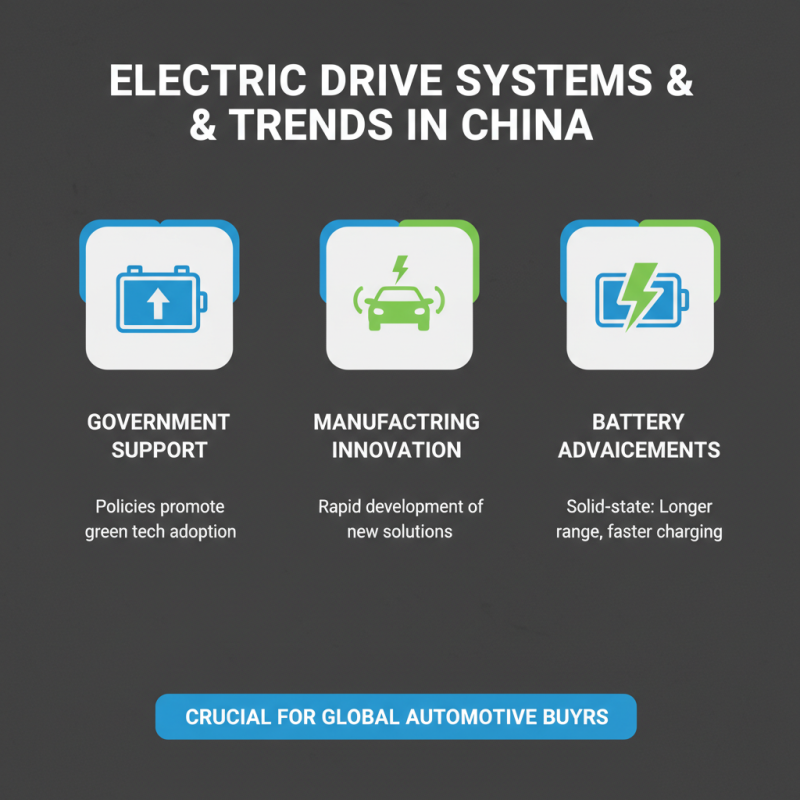
Electric drive systems are taking center stage in China's automotive landscape. With government policies encouraging green technology, manufacturers are rapidly developing innovative solutions. For global buyers, understanding the latest trends is crucial. Battery technology advancements, such as solid-state batteries, promise longer ranges and faster charging.
Another focus is on integrated electric drive modules. These combine motor, inverter, and transmission into a single unit. This integration is key to enhancing efficiency and reducing manufacturing costs. However, challenges persist. Supply chain reliability can impact production timelines. An over-reliance on specific materials raises concerns about sustainability.
Chinese firms are also exploring autonomous electric vehicles. These technologies depend on sophisticated sensors and AI systems. Although this progress seems promising, safety and regulatory hurdles remain significant. Comprehensive testing is essential to ensure public trust. The balance between innovation and reliability is a delicate one, shaping the future of electric mobility in China.
Hybrid Powertrain Innovations in the Chinese Market
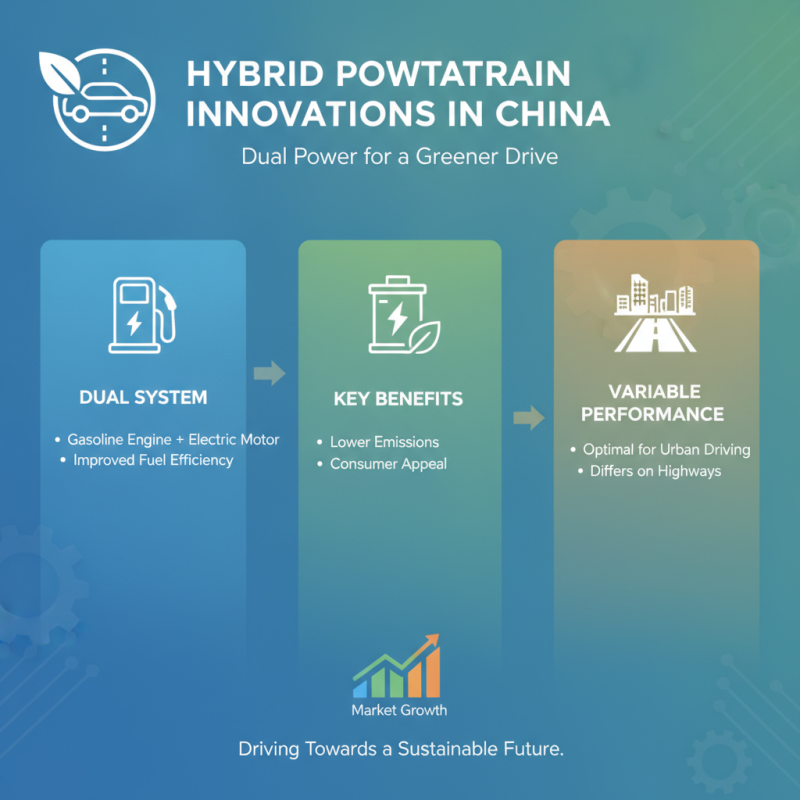
In recent years, hybrid powertrain innovations have transformed the Chinese automotive market. These vehicles combine gasoline engines with electric motors. This dual system offers better fuel efficiency and lower emissions. Buyers are increasingly attracted to these benefits. However, the effectiveness of hybrid vehicles may vary based on driving conditions. Many urban areas require different performance than highways.
Chinese manufacturers are making strides in hybrid technology. They invest heavily in research and development. New battery technologies promise longer ranges and faster charging times. Yet, there are challenges. Battery longevity often remains a concern for consumers. Additionally, the environmental impact of battery production raises questions. Sustainability continues to be a pivotal topic.
Adoption rates for hybrid vehicles are climbing, but some consumers remain cautious. Price points can be high for advanced models. Many potential buyers wonder about long-term costs versus traditional cars. The market needs to address these hesitations. Increased transparency about maintenance and performance could help boost buyer confidence.
Autonomous Driving Technologies: China's Leading Edge
China is rapidly advancing in autonomous driving technologies, positioning itself as a leader in this field. With significant investments and research, various technologies are emerging. These include advanced sensor systems, artificial intelligence, and machine learning algorithms. However, challenges remain in regulatory frameworks and infrastructure development. There is a pressing need for improved standards and uniformity in regulations.
Developers are striving to create vehicles that can understand complex driving environments. High-definition maps play a crucial role in this. Yet, inconsistencies in data can lead to issues. Testing vehicles in diverse conditions is essential, but not always feasible. Real-world trials are often limited by safety concerns.
Despite these hurdles, the commitment to innovation is strong. Collaborations across sectors are crucial for creating an ecosystem that supports autonomous driving. Public acceptance is also a key factor. Educating potential users about technology is necessary for adoption. Overall, China’s advancements in this area show great promise. However, progress demands continued effort and introspection.
Top 10 Automobile Drive Technologies in China for Global Buyers
Future Prospects of Drive Technologies for Global Buyers in China
The landscape of automobile drive technologies in China is evolving rapidly. Global buyers are increasingly focused on understanding these advancements. Many Chinese companies are investing heavily in electric drive systems. These systems offer efficiency and sustainability, reshaping consumer expectations. Buyers should be aware of the diverse options available, as each technology comes with unique benefits. Diesel engines are also making strides in efficiency, reflecting a balance between power and environmental concerns.
Electric and hybrid technologies dominate discussions about the future. However, traditional combustion engines still play a significant role. The transition to greener solutions is not without challenges. Consumers may experience resistance due to concerns about charging infrastructure. Some also question the long-term reliability of new technologies. As these dynamics play out, global buyers must stay informed.
It is essential to engage with local experts who understand these emerging trends. They can provide critical insights into selecting the right technology for specific needs. A thorough analysis of market developments will enhance decision-making. Ultimately, understanding these technologies will empower buyers to make informed choices.