Why Is My Car Charger Not Working?
A car charger that suddenly stops working can turn a normal drive into a frustrating pause. Your phone may show no charging symbol, or the battery percentage may remain frozen. Sometimes, the problem is simple. A loose connection, damaged cable, or dusty USB port can interrupt power within seconds.
Daniel Reed, a certified automotive electrical technician with 15 years of workshop experience, says, “Check the power path before blaming the charger.” This practical advice applies to every Charger Car system, including USB adapters, built-in ports, and portable EV charging equipment. A dead fuse, weak outlet, or incompatible adapter may be responsible. The charger itself may not be faulty.
Small details matter.
Look at the plug. Is it warm, cracked, or discolored? Try another approved cable and test the outlet with a different device. If the charger works only when held at an angle, its internal connection may be failing. That symptom should not be ignored. Heat, burning smells, or repeated power cuts require immediate inspection by a qualified professional.
Still, diagnosis is not always obvious. Some vehicles reduce charging speed when the battery is hot or nearly full. Others disable accessory power after the ignition is switched off. I have seen drivers replace a good charger because they missed this setting. Therefore, this guide examines common causes, safe checks, and practical repair decisions. It also recognizes an uncomfortable truth: guessing can cost more than testing. A careful inspection usually saves time, protects the vehicle, and restores dependable charging.
Identify the Charger Type: 12V Sockets, USB-A, USB-C, and Wireless Pads
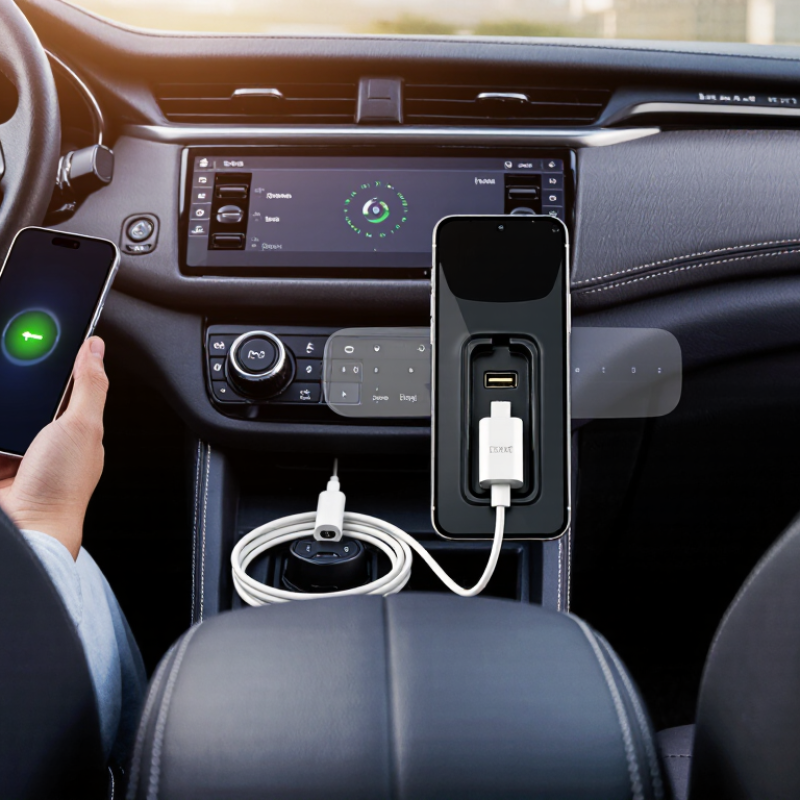
When a car charger stops working, identify its type before replacing it. A 12V socket may lose power when the ignition is off, depending on the vehicle. Check the owner’s manual, then test the socket with a known-working device. USB-A ports often provide basic charging, while USB-C ports may support faster USB Power Delivery. The USB Implementers Forum’s USB Power Delivery 3.1 specification allows compatible systems to deliver up to 240 watts, but your car port and cable may support far less. A USB-C-shaped port alone does not guarantee fast charging. Wireless pads need correct phone placement and can slow when the device gets hot.
Tips: Try one change at a time. For a 12V adapter, inspect the metal contacts and vehicle fuse; never force a loose fit. Swap the cable, then test another port. On a wireless pad, remove a thick case and center the phone over the coil. Small shifts matter. I once blamed the pad, though the cable was the weak link.
If several devices fail in one socket, the vehicle’s power supply may be the issue. If only one device fails, check its charging settings and cable. Stop using any adapter that smells burnt, feels unusually hot, or has damaged contacts. A quick check can narrow the fault, but it may not reveal an intermittent connection.
Check Power Delivery: Verify 12V Socket Voltage and 5V USB Output
A car charger can look faulty when the socket is not supplying power. Check the 12V socket before replacing the charger. With the vehicle parked, set a multimeter to DC voltage and place its probes carefully against the socket contacts. Avoid letting the probes touch each other. Many sockets read close to 12 volts with the engine off, though the exact reading varies with battery condition and vehicle design. No reading may point to a blown fuse, a poor connection, or a socket that only works with the ignition on. Check the vehicle manual for the correct fuse location. Be cautious here; a loose probe can give a misleading result.
Next, test the charger’s USB port with a cable and a device known to work. A standard USB output should provide about 5 volts, but a basic voltage meter or USB tester gives a clearer check. If the socket has power but the USB output is absent or far below 5 volts, the charger may be damaged. If voltage appears normal, try another cable; worn connectors often cause intermittent charging. Watch for a charging icon that flickers when the cable moves. That detail matters. I once assumed the charger was dead, only to find a bent cable plug. Measurements help narrow the cause, but they do not prove every charger is safe or reliable.
Inspect Fuses, Wiring, and Ground Connections Using OEM Ratings
Why Is My Car Charger Not Working?
A dead car charger may point to a blown fuse, loose wiring, or a poor ground connection. Start with the owner’s manual and identify the fuse assigned to the outlet. Check its rating before replacing it. The new fuse must match the specified amperage; a higher-rated fuse can let wiring overheat. With the vehicle switched off, inspect the fuse for a broken metal link. Also look for a loose plug, frayed insulation, or corrosion around accessible connections. Small clues matter.
Tips: Use a test light or multimeter only if you know how to use it safely. Check the outlet’s power and ground against the vehicle’s service information. A ground connection should be clean and secure, not merely touching metal. Avoid probing airbag wiring or unfamiliar connectors. If a replacement fuse blows again, stop. There may be a short, and repeated replacements will not fix it.
A charger can also fail, so test it in another suitable outlet before tracing the car’s wiring. I once assumed the fuse was the problem, but a loose socket caused the intermittent power. That was a useful reminder: symptoms can mislead. If wires are damaged, hot, or difficult to access, have a qualified technician inspect them using OEM ratings and procedures. Don’t guess.
Test USB-C Charging Against USB Power Delivery Standards Up to 240W
A car charger can look healthy while delivering too little power. A phone may show a charging icon, yet its battery percentage barely moves during navigation. Check the USB-C cable, adapter, and device together; each part affects charging. USB Power Delivery is a negotiation, not simply a promise printed on a socket. The USB Implementers Forum’s USB PD 3.1 specification raises the maximum power to 240 watts, using Extended Power Range voltage and current combinations up to 48 volts and 5 amps. That ceiling does not mean every car charger or phone supports it.
Start with a simple test. Try a known-good cable and another charging port, then check the charger’s stated output. Look for USB PD support and the power profile your device can accept. A 240-watt-rated cable alone cannot make a low-output car adapter deliver 240 watts. Nor will a phone necessarily draw the adapter’s full capacity. Keep the car running during a longer test, and note whether charging improves with the screen off. Small details matter. If the connector feels loose, or the port is dusty, charging may cut in and out. I may be overlooking a vehicle-specific power limit, so compare results with its manual. USB-IF’s PD 3.1 materials describe the standard’s 240-watt capability; they do not certify every charger’s real-world performance.
Why Is My Car Charger Not Working? USB-C Charging vs. USB Power Delivery Standards
This chart shows the maximum power available at common USB Power Delivery voltage levels. A USB-C charger may fail to charge when the charger, cable, and device cannot negotiate a compatible voltage and current profile.
How to read it: Standard Power Delivery profiles reach up to 100 W at 20 V and Extended Power Range profiles reach up to 240 W at 48 V. Actual charging power depends on successful negotiation, cable current rating, device limits, and available input power from the vehicle.
Match Charger Load to Vehicle Limits and Replace Faulty Components Safely
A car charger may stop working because its power demand exceeds what the vehicle’s outlet can supply. Check the owner’s manual for the socket’s voltage and current limit, then compare it with the charger’s label. A high-output adapter can overload an accessory outlet, especially when several devices are connected. Try one device at a time. If the charger works in another suitable outlet, the vehicle socket may be the problem.
Look for a loose plug, bent contact, or heat discoloration. Unplug it before inspection. Never force a connector or bypass a fuse. If the vehicle’s fuse has failed, replace it only with the same type and rating specified in the manual; a larger fuse can leave wiring unprotected. Still no power? A mechanic can test the outlet and its wiring safely. For a plug-in vehicle charger, use only equipment and circuit ratings approved for that vehicle, and ask a qualified electrician to assess repeated trips or hot connections. Stop using damaged cables. Small cracks matter. I once assumed a worn plug was harmless, but that judgment was too casual; heat marks deserve attention.